Here’s the question that shows up every few years in every business owner’s calendar: Is it time to repaint, or can we get away with touch-ups?
It sounds simple. It’s not. Touch-ups done wrong look worse than no touch-ups at all — mismatched sheen, faded base color, roller marks that never quite blend. And full repaints done too early? That’s thousands of dollars left on the table. Knowing when to repaint a commercial space is the kind of decision that separates business owners who protect their brand image from those who let it slowly fall apart while telling themselves it still looks fine.
The good news: this doesn’t have to be a guessing game. A qualified commercial interior painting contractor can walk your space and give you a straight answer. But before that conversation happens, here’s what you need to understand.
Key Takeaways:
- Touch-ups work when paint is less than 5 years old and the damage is isolated — think scuffs, small holes, or dings from moving furniture.
- Full repaints are the better investment when you’re seeing widespread fading, peeling, or staining — or when your color no longer reflects your brand.
- Mismatched touch-ups can actually hurt your business image more than worn paint.
- Most commercial interiors need a full repaint every 5–7 years depending on traffic, lighting, and wall finish.
- A professional assessment before committing to either option can save you money and headaches.
The Real Cost of Guessing Wrong
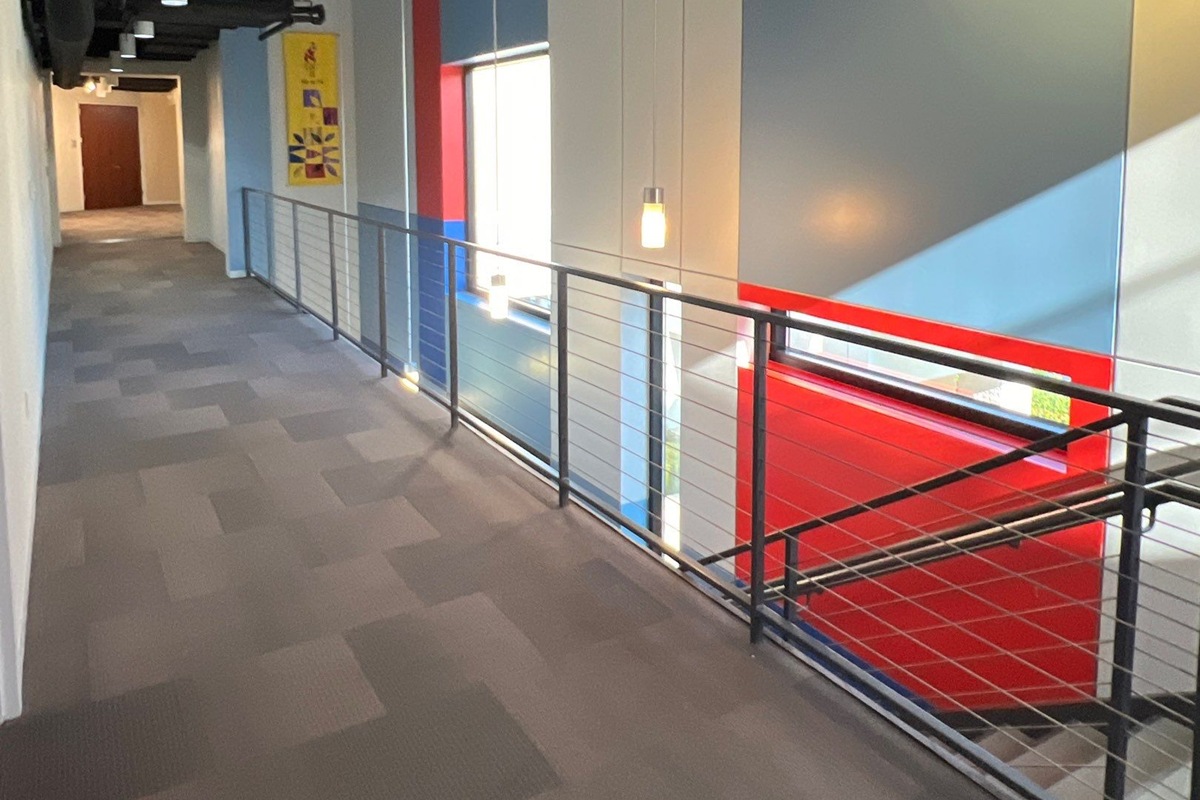
Business owners don’t think much about paint — until clients start thinking about it. A scuffed lobby wall. A reception area with yellowing trim. A conference room that looks like it was last updated when flip phones were popular.
First impressions carry weight. Research has consistently shown that the physical appearance of a business location affects customer trust and perceived quality of service. When your space looks run-down, people assume your operation is too.
On the flip side, over-investing in a full repaint when spot touch-ups would have done the job fine is a real money drain — especially across multiple locations or large square footage.
The real cost isn’t just the paint job. It’s the business cost of making the wrong call.
When Touch-Ups Actually Make Sense
Touch-ups are a solid option under specific conditions. If your walls are less than five years old, the paint hasn’t significantly faded, and the damage is isolated — scuffs near a door, dings from moving office furniture, a section near a chair rail that sees constant contact — a skilled painter can blend new paint into the existing surface without a major color shift.
The key variables that make touch-ups viable:
- Paint age under 5 years — color drift from UV exposure and off-gassing is still minimal.
- You still have the original paint formula on file or a paint code that can be matched.
- Damage is limited to less than 10–15% of any given wall surface.
- The existing finish is intact — no peeling, chalking, or widespread moisture damage.
When those conditions are met, touch-ups are fast, affordable, and effective. When they’re not, touch-ups become a liability.
The Touch-Up Trap: Why Mismatched Paint Hurts More Than It Helps
Here’s what most business owners don’t realize until it’s too late: a bad touch-up job draws more attention to the problem than the original damage did.
Paint ages. It shifts color, loses sheen, and reacts to light differently over time. A fresh patch of paint applied to a 4-year-old wall will almost always look slightly different — brighter, shinier, or slightly off in hue. In a well-lit office or retail space, that contrast is visible to everyone who walks in.
This is the touch-up trap. You spend money trying to fix the problem, and you end up with a more obvious one.
A professional commercial interior painting contractor will tell you upfront if blending is realistic for your walls. If it’s not, they’ll say so. That kind of honest assessment is exactly what you need to make a smart decision.
When to Repaint a Commercial Space: The Clear Signs
There are moments when the answer to the touch-up vs. repaint question isn’t a close call at all. Knowing when to repaint a commercial space means watching for these signals:
- Widespread fading or discoloration — If the whole wall has shifted color or dulled significantly, no amount of spot work will fix it.
- Peeling or bubbling paint — This signals a bond failure between the paint and substrate. Touch-ups won’t hold and the problem will spread.
- Staining that won’t cover — Water stains, smoke, or grease that bleeds through standard paint requires a full repaint with the right primer.
- Brand or color change — If you’ve rebranded or want to refresh your look, touch-ups can’t help you. It’s repaint time.
- Paint age over 7 years — At this point, the paint has degraded enough that a full repaint protects the substrate and gives you a clean, consistent finish.
- High-traffic areas showing consistent wear — Hallways, breakrooms, and entryways reach the end of their useful life faster than quieter spaces.
If two or more of these are true for your space, stop weighing touch-ups. You’re past that point.
How to Think About Cost: The Right Frame
Business owners often ask: “How do I spend less money?” That’s the wrong frame.
The better question is: “What gives me the most value per dollar spent over the next 3–5 years?”
Touch-ups on a space that needs a full repaint will cost you twice — once for the touch-up that doesn’t hold, and again for the repaint you should have done in the first place. A full repaint done right, with quality paint and proper prep, lasts 5–7 years in a commercial environment. That’s years of not worrying about it.
Touch-ups, when they’re the right call, can extend the life of a good paint job by 1–2 years at a fraction of the cost. That’s excellent value — if you’re actually in a position to use them effectively.
Knowing which situation you’re in is where a professional assessment becomes worth its weight in gold.
How Often Should You Repaint a Commercial Space?
There’s no universal answer, but there are solid baselines used across the commercial painting industry:
- Low-traffic offices: Every 5–7 years
- Retail spaces and showrooms: Every 3–5 years
- High-traffic hallways, restrooms, breakrooms: Every 2–4 years
- Hospitality and healthcare: Every 2–3 years in patient areas or public spaces
These ranges assume standard commercial-grade paint in normal conditions. If your facility uses harsh cleaning chemicals, sees heavy foot traffic, or has lighting that accelerates fading, adjust accordingly. Your commercial interior painting contractor should help you build a maintenance schedule tailored to your space — not a generic one.
A Simple Decision Framework for Business Owners
Before you call anyone, walk your space and answer these questions:
- Is the paint more than 5 years old? If yes, lean toward repaint.
- Is the damage covering more than 10–15% of wall surface in any room? If yes, repaint.
- Do you still have the original paint code or leftover paint? If no, touch-ups get risky.
- Are you seeing peeling, bubbling, or staining that keeps coming back? Repaint — with the right primer this time.
- Has your brand or color palette changed? Full repaint, no question.
- Is the damage truly isolated — one or two spots on otherwise solid walls? Touch-up is worth exploring.
If you land on “repaint” for most of these, trust that read. Putting off a necessary repaint doesn’t save money — it shifts the cost forward while your space keeps working against you.
Stop Guessing. Get a Real Answer.
You run a business. Your time is better spent on growth than on squinting at scuffed walls and wondering if they’ll hold for another year.
Oakcliff Painting helps business owners make confident, informed decisions about their commercial spaces. We walk your facility, give you a straight assessment — touch-up or repaint, and exactly why — and we back our work with a process built for commercial environments.
No pressure. No upsell for the sake of it. Just an honest look at your space and a plan that makes sense for your budget and your timeline.
Call 770-405-3449 today to schedule your free walk-through. Your space reflects your business. Make sure it’s saying the right thing.